
By the end of June, Delhi changes character. The dry heat gives way to heavy, sticky air, sudden showers, and that familiar damp that settles into everything — including your wardrobe. For a man who wears tailoring through the rains, the question is not which colour to choose, but which cloth will hold its shape when the humidity climbs. After four decades behind the counter in Chandni Chowk, this is one of the most useful conversations we have with customers each monsoon.
The monsoon test
Three things decide how a suiting fabric copes with the rains: how quickly it creases and recovers, how it behaves when the air is damp, and how easily it dries and resists the musty smell that humidity brings. Pure wool, poly-wool blends and Fine Wool Rich each answer these differently. Here is a simple way to compare them.
| Fabric | Crease recovery | In humid air | Best for the monsoon |
|---|---|---|---|
| Pure Wool | Good — natural spring | Breathes well, dries slower | Office days under cover |
| Poly-Wool Blend | Excellent — bounces back | Dries fast, very low crease | Daily wear, travel, long commutes |
| Fine Wool Rich | Very good | Balanced — breathes and recovers | When you want comfort and a fine finish |
Pure wool: the breathing classic
Pure wool is a remarkable natural fibre — its crimped structure traps air, so it breathes and stays comfortable even when the day turns close. It also has a natural spring that lets light creases fall out on a hanger overnight. The trade-off in the monsoon is drying time: once wool takes on moisture it holds it longer, so a soaked pure-wool suit needs patience and air to recover. It is a beautiful choice for the man whose day runs office-to-car-to-office, largely under cover.
Poly-wool blends: the monsoon workhorse
This is the cloth we most often recommend for the rainy months. Adding a measured proportion of polyester to wool keeps the warmth and handle of wool while adding two monsoon virtues: it resists creasing almost stubbornly, and it dries quickly. A poly-wool suit survives a packed Metro, a scooter ride and a sudden shower, and still looks pressed at the meeting. Our Fine Wool Blend range is built exactly for this — wool comfort with everyday resilience.
Fine Wool Rich: the middle path
Between the two sits Fine Wool Rich — a high proportion of fine wool with just enough blend to add resilience. It gives you the soft hand and quiet finish of good wool while recovering more readily than pure wool when the air is heavy. If you want one suit length that feels premium yet copes happily with July, this is a sensible place to look, alongside the finer Super 120s for special occasions.
Caring for either through the rains
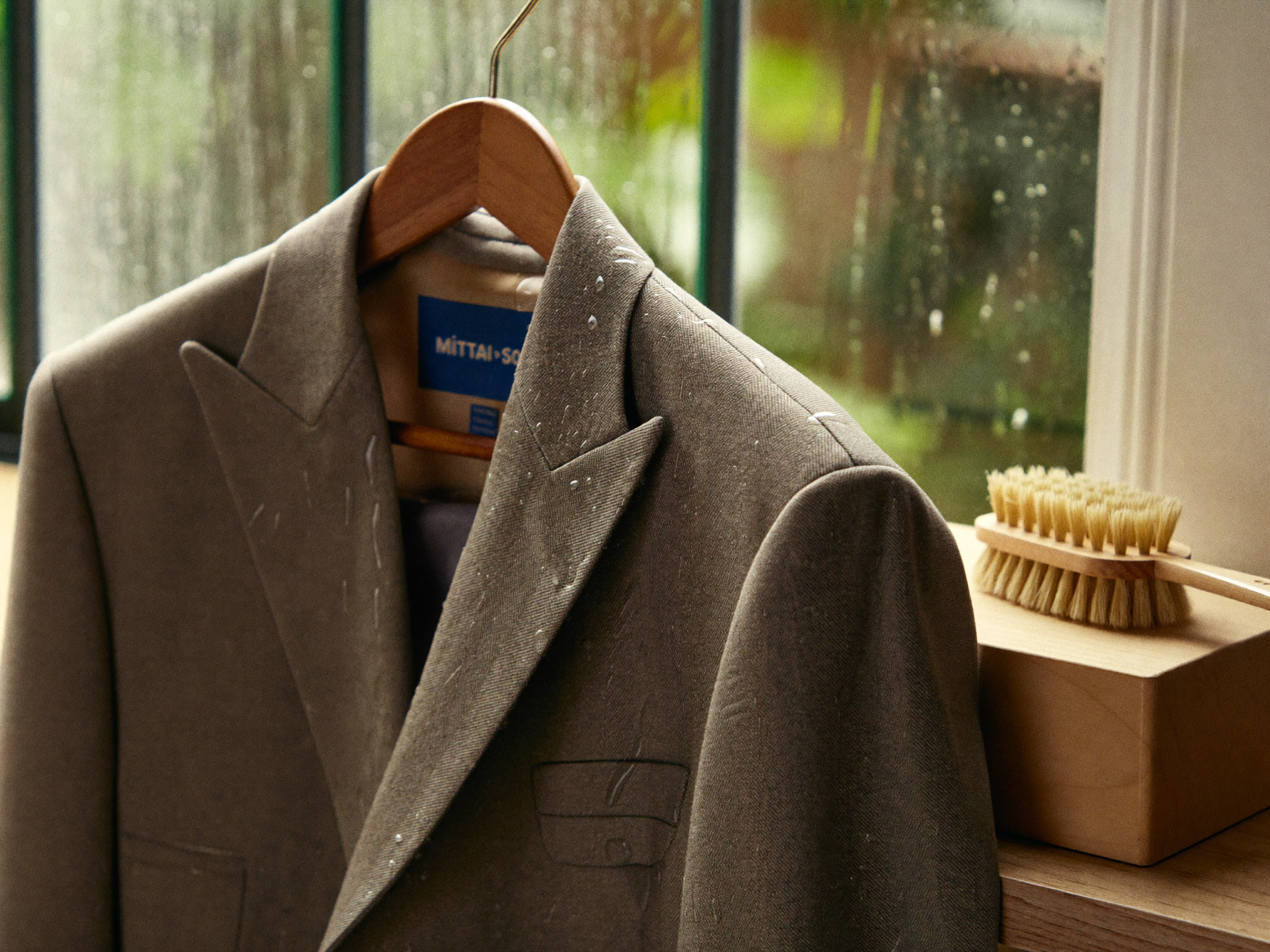
Whatever you choose, monsoon care is the same: never lock a slightly damp suit inside a plastic cover, hang it on a broad wooden hanger to let it breathe and dry, brush it down gently after wear, and keep a cedar block or a few silica sachets in the wardrobe to fight the damp. Good cloth, looked after, will outlast many monsoons.
If you would like to feel the difference between a pure wool and a poly-wool blend in your own hands, visit our store in Chandni Chowk, Delhi, explore the collection online, or message us on WhatsApp at +91 99100 34000 — we are always happy to help you choose the right cloth for the season.