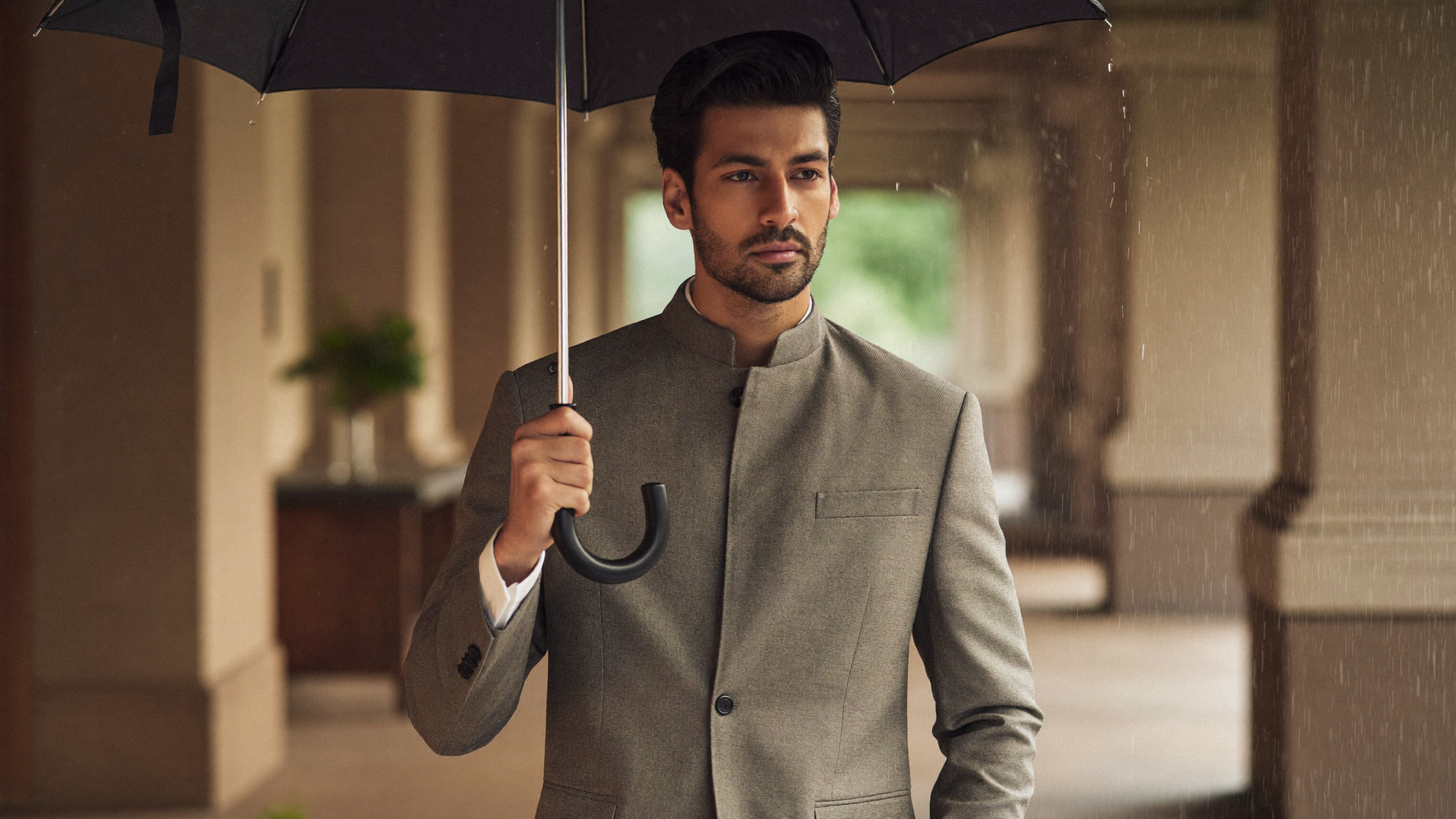
In Delhi, the monsoon is a season of contrasts — a cool, welcome break from the heat, and a daily test for anything you wear. A suit that looked crisp when you left home can arrive at a meeting limp, creased and clinging. The good news is that a suit made for the rains behaves very differently from one simply caught in them. Four decades of dressing Delhi's gentlemen have taught us that the right choices at the tailoring stage matter far more than any umbrella.
Start with a fabric that fights back
The single biggest decision is the cloth. Humid air makes fibres swell and hold a crease, so you want a fabric that springs back. A high-twist wool, where the yarn is tightly spun, resists wrinkling and breathes well, while a good poly-wool blend adds durability and dries faster after a shower. Our Fine Wool Blend suiting is a dependable monsoon workhorse for exactly this reason. If you prefer pure wool, a mid-weight all-season cloth such as Super 100s holds its shape in damp weather better than a very fine, lightweight summer wool, which can look tired the moment it gets moist.
Ask your tailor about construction
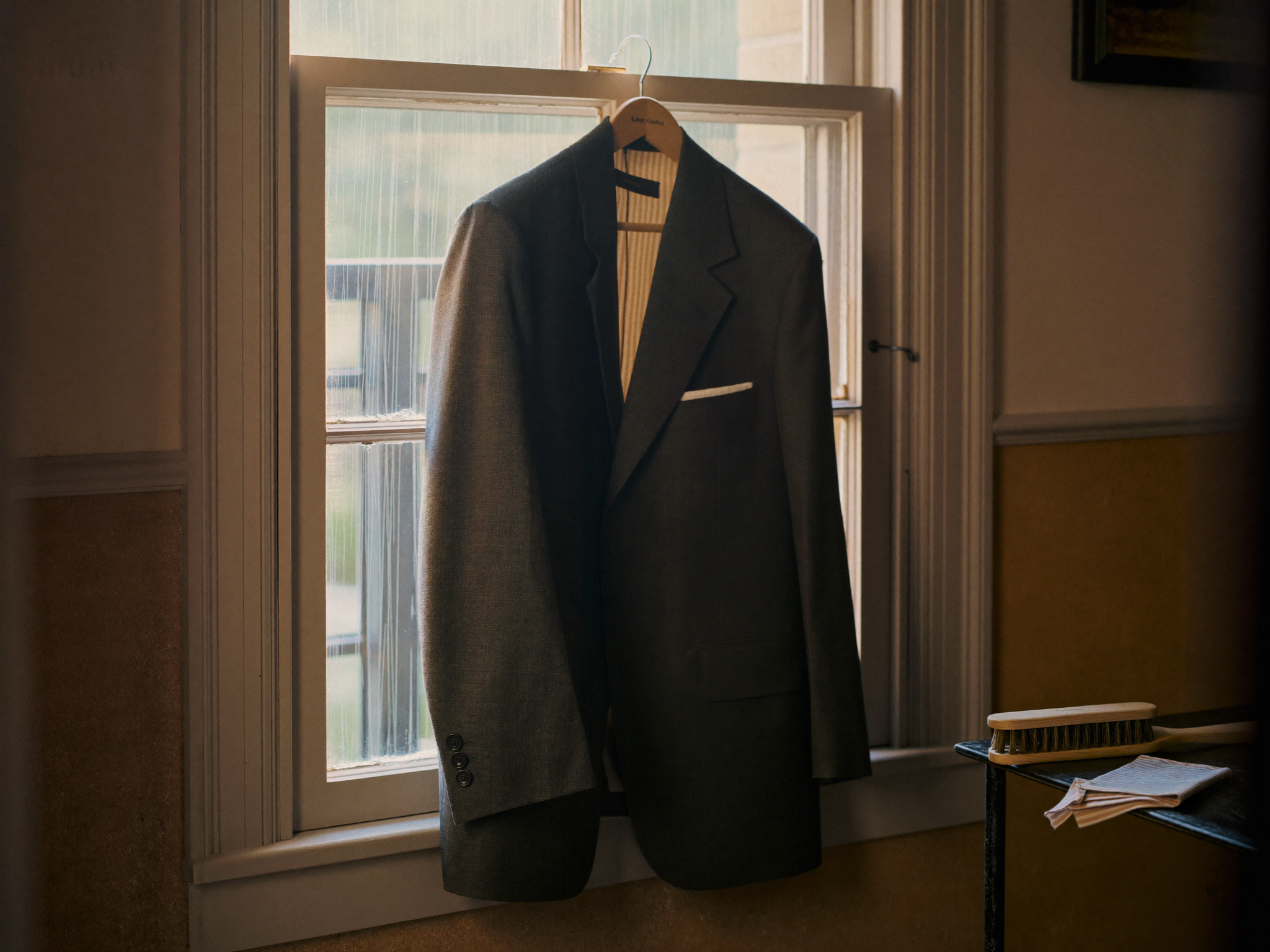
How a jacket is built decides how it copes with moisture. A half-canvas construction, where the chest is shaped with a floating canvas rather than glued, lets the cloth breathe and recover its shape — fully fused jackets can bubble or stiffen once humidity works into the glue. Ask for a half-lining or a breathable lining too: less fabric against your back means less clamminess, and the jacket dries out faster at the end of a wet day. These are small requests that make a real difference through July and August.
Colours and weaves that hide the weather
Rain leaves marks. Very pale or very flat cloths show every water spot and damp patch, so lean towards mid-to-deep tones — charcoal, slate, deep blue — and textured weaves such as a subtle herringbone or a fine birdseye. The broken surface disguises splashes and reads richer under the grey monsoon light. Save your lightest greys and beiges for the dry months.
Your monsoon tailoring cheat-sheet
| Decision | Monsoon-smart choice | Why it helps |
|---|---|---|
| Fabric | High-twist wool or poly-wool blend | Springs back from creases, dries faster |
| Weight | Mid-weight all-season, not ultra-light | Holds its shape when damp |
| Construction | Half-canvas, half-lining | Breathes and recovers; no glue bubbling |
| Colour | Charcoal, slate, deep blue | Hides water spots and damp patches |
| Weave | Herringbone or birdseye texture | Disguises splashes, richer in grey light |
| Trousers | Two pairs, slightly shorter break | Rotate dry sets; hems clear of puddles |
A few habits that keep it sharp
- Rotate two trousers. A jacket outlasts its trousers, so a spare pair means you always have a dry, pressed set ready.
- Air a damp suit, don't cupboard it. Hang it in open air until fully dry before it goes back inside.
- Keep hems just off the ground. A slightly shorter trouser break keeps the cloth clear of puddles and splashback.
- Never brush wet wool. Let it dry completely, then lift the dust away with a soft clothes brush.
A suit made with the rains in mind will look composed on the wettest Delhi morning — and serve you many seasons more. Come and feel the monsoon-friendly weaves in person at our Chandni Chowk store, explore the collection online, or simply message us on WhatsApp at +91 99100 34000 and we'll help you choose.