
Step out in Delhi in June and you learn very quickly that not all suits are built for the same weather. The man who looks crumpled and uncomfortable by noon usually isn't wearing the wrong colour — he's wearing the wrong weight. After four decades behind the counter, we've found this is the single most useful thing a customer can understand before choosing cloth: how heavy the fabric is, and why that matters more in summer than almost anything else.
What "fabric weight" actually means
Fabric weight is simply how much a given length of cloth weighs, usually measured in grams per metre. A lighter cloth is woven to be thinner and more open, so air moves through it and heat escapes. A heavier cloth is denser and warmer — wonderful in December, punishing in May. When a tailor or shopkeeper says a suiting is "summer weight" or "all-season," this is the number they're really talking about.
It is easy to confuse weight with the wool count (the Super 100s, 120s and 140s figures). They are related but not the same: count describes how fine the yarn is, while weight describes how much cloth there is. A high count often comes in a lighter cloth, which is why finer fabrics tend to feel cooler — but always check the weight itself rather than assuming.
Why lighter wins in an Indian summer
Our summers are long, bright and frequently humid. A lighter, more breathable suiting lets your body do what it naturally wants to do — release heat — instead of trapping it against the skin. It also drapes more softly, so it sits comfortably through a long day of meetings, travel or a daytime function rather than feeling like armour. The trade-off is honesty: very light cloth creases a little more easily and shows less structure, so it rewards good tailoring and a sensible lining.
| Season & use | Approx. weight | How it feels | Best for |
|---|---|---|---|
| Peak summer | Light (~190–230 g/m) | Airy, soft, breathable | Day functions, travel, hot offices |
| All-season | Medium (~240–290 g/m) | Balanced, holds shape | The one suit that works most of the year |
| Winter | Heavy (~300 g/m+) | Dense, warm, structured | North-Indian winters, evening weddings |
How to read it on the cloth
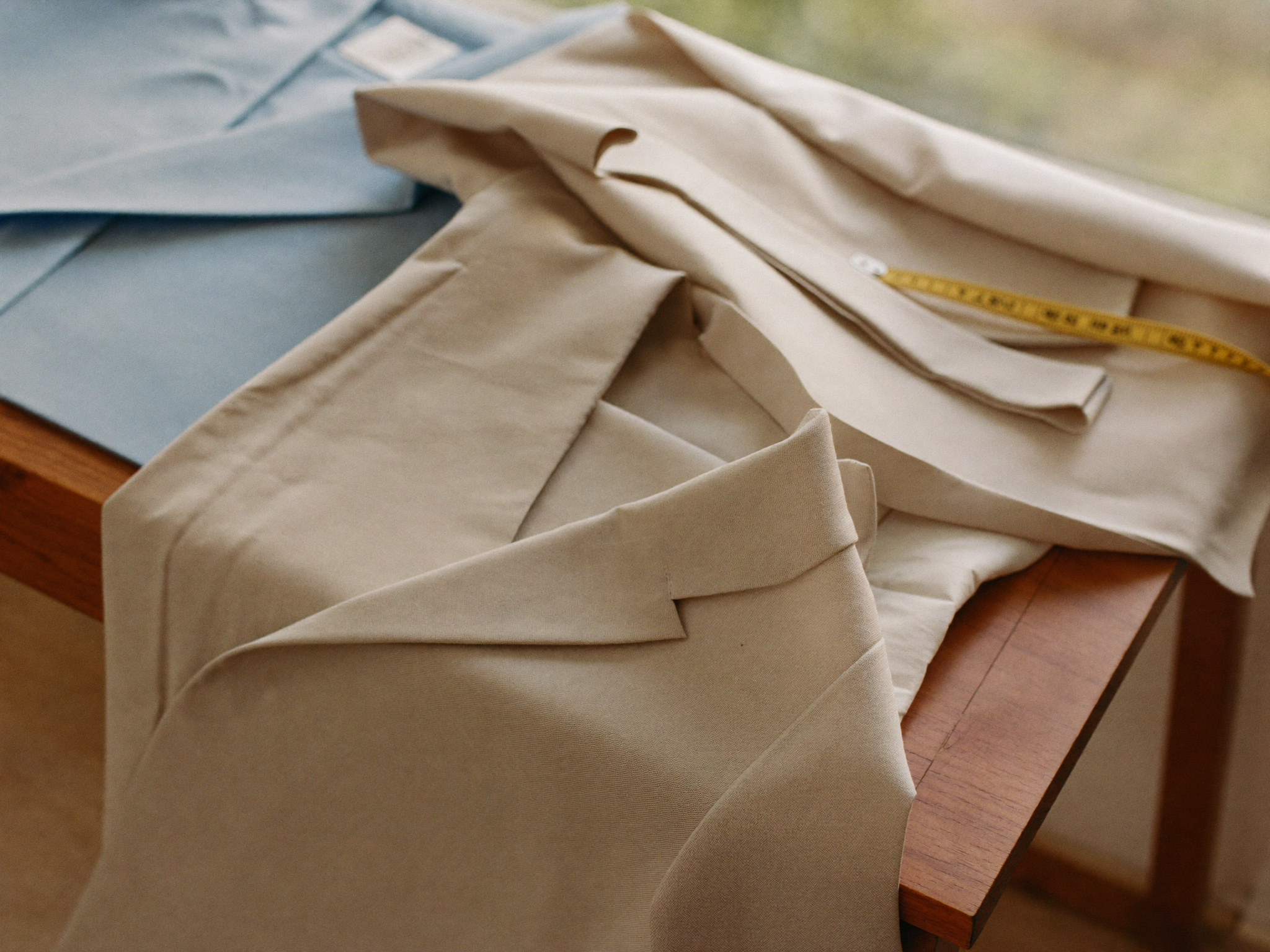
You don't need a scale. Hold the fabric up to the light: a summer cloth lets more light through and shows a finer, more open weave. Drape it over your hand — lighter suiting falls in a soft, fluid line rather than standing stiffly. Finer, higher-count cloths such as Super 100s are a reliable starting point for the heat, while a fine wool blend adds a little resilience and crease-recovery for men who are out and about all day.
A few honest cautions
Lighter cloth asks for a little care in return. Choose a breathable lining so the jacket doesn't undo the good work of the fabric, hang the suit properly between wears, and accept that very light suiting will crease — that softness is the price of comfort. Pair it with lighter colours and you'll feel the difference on the warmest days.
If you'd like to feel the weights for yourself, visit us at our Chandni Chowk store and run a few summer-weight cloths through your hands — it tells you more in a minute than any chart can. You can also explore the collection or message us on WhatsApp at +91 99100 34000, and we'll happily guide you to the right cloth for the season.